Bhagavad Gita Chapter 2 Shloka 16 Meaning: Sat & Asat Explained for Modern Life and Inner Peace

Dark contrast artwork representing Bhagavad Gita Chapter 2 Shloka 16 about Sat and Asat, inner peace, spiritual wisdom, and Krishna’s teachings.

Bhagavad Gita 2.16 reveals a powerful truth: what is temporary (Asat) cannot be permanent, and what is eternal (Sat) never changes. This blog explores real-life stories, emotional insights, and modern psychology to show how Krishna’s teachings bring clarity, reduce stress, and guide us toward inner peace and spiritual growth.

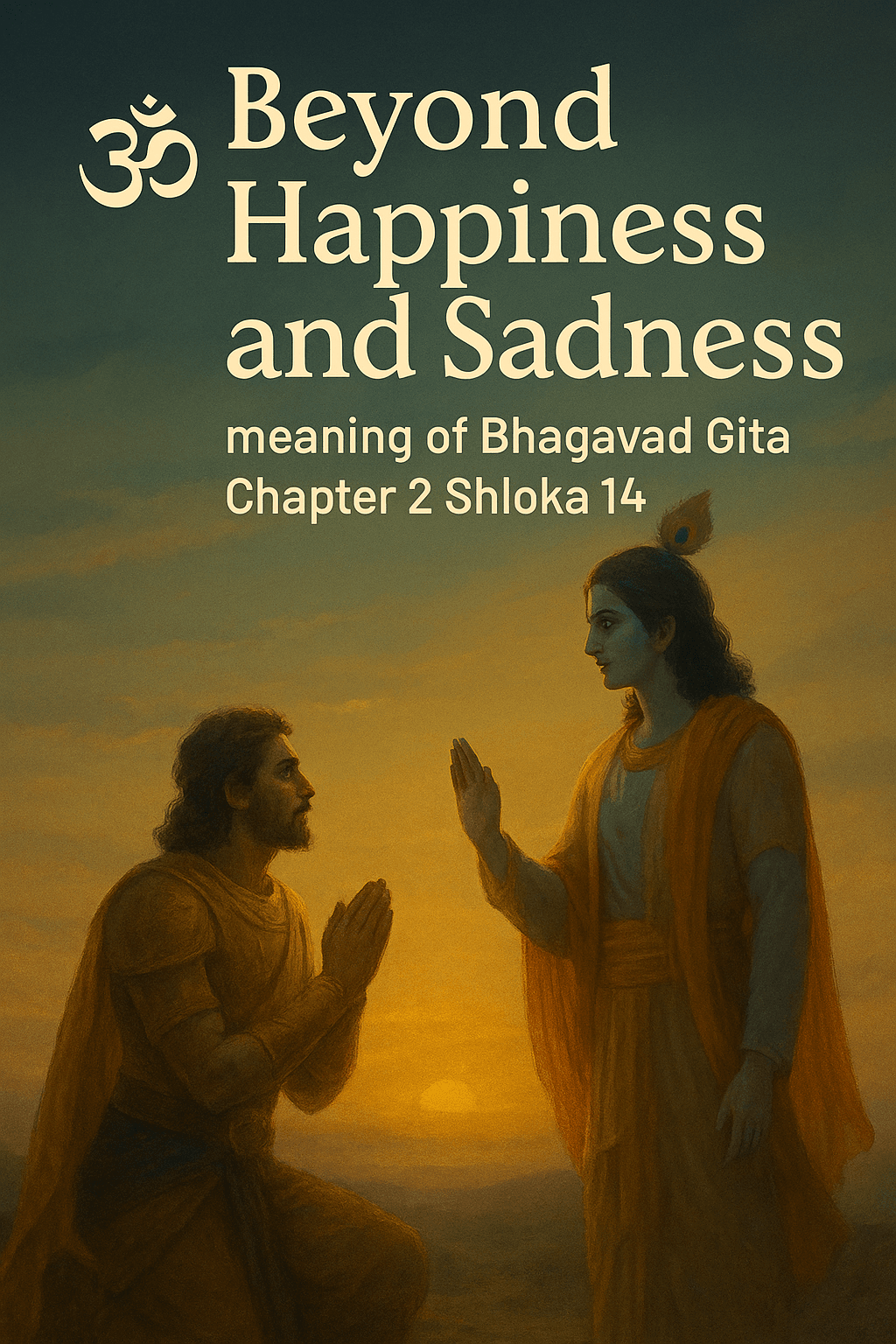
Bhagavad Gita Chapter 2 Shloka 14 Meaning — The Art of Titiksha and Living Beyond Pleasure & Pain

A serene digital painting showing a meditative figure sitting at sunrise with Lord Krishna’s essence in the background, symbolizing the message of Bhagavad Gita Chapter 2 Shloka 14 — embracing sukha (joy) and dukha (sorrow) with calm awareness and Titiksha (endurance).

Discover the timeless wisdom of Bhagavad Gita Chapter 2 Shloka 14, where Lord Krishna reveals the art of Titiksha — enduring both pleasure and pain with awareness. Through modern reflections, personal stories, and cultural depth, this post bridges ancient philosophy with the digital age, helping you find peace amid chaos. Learn how sukha-duhkha are not opposites, but teachers guiding you toward balance and spiritual resilience.
भगवद गीता अध्याय 2 श्लोक 14 में श्रीकृष्ण हमें सिखाते हैं कि सुख और दुःख जीवन के विरोध नहीं, बल्कि आत्मज्ञान के मार्ग हैं। यह लेख आधुनिक जीवन में “तितिक्षा” के अर्थ को समझाता है — कैसे जागरूक सहनशीलता ही सच्ची शांति का आधार बनती है।

Bhagavad Gita 2.13 Meaning – The Mystery of Continuity and Eternal Soul

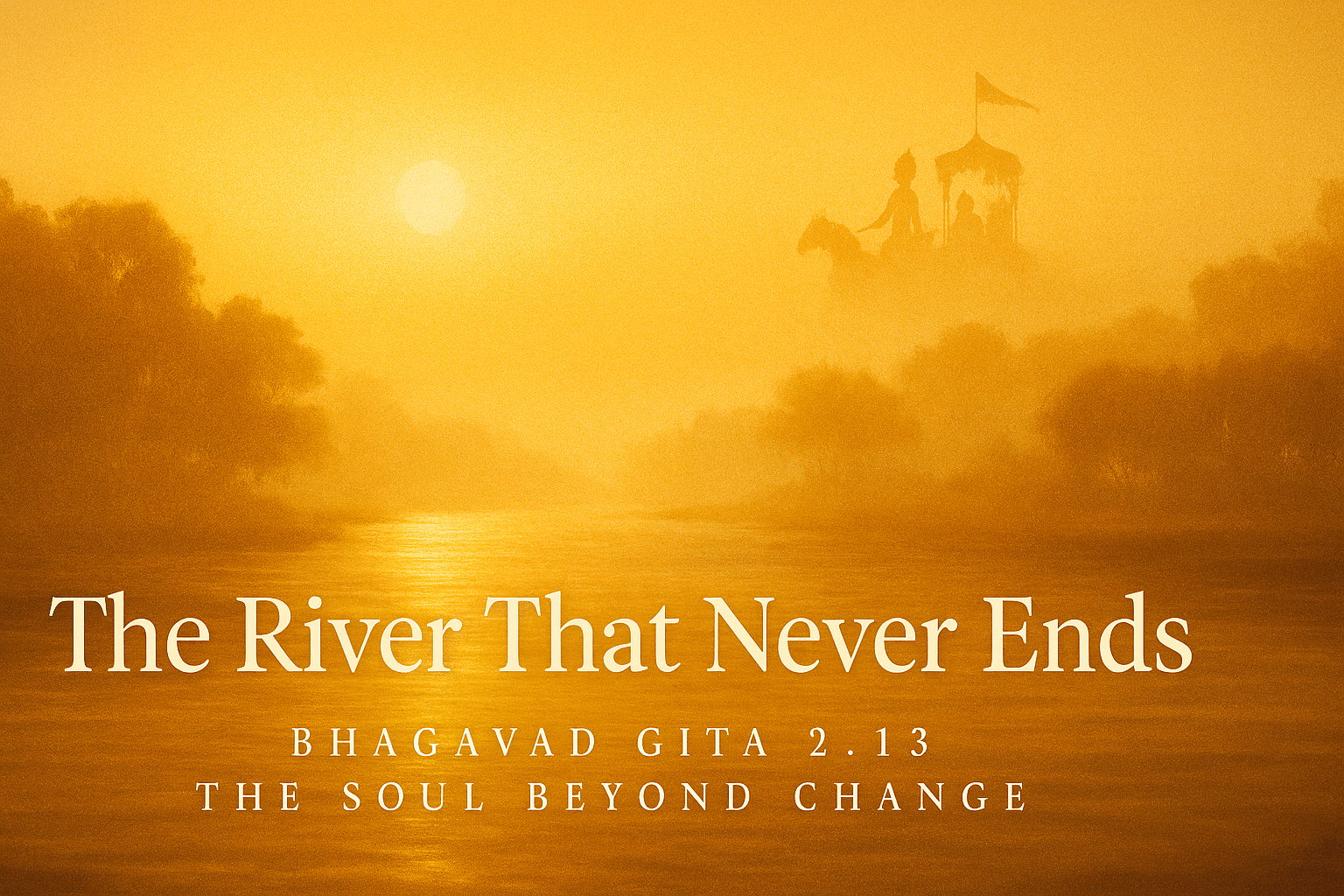
Bhagavad Gita Chapter 2 Shloka 13 – The River That Never Ends | Eternal Soul and Impermanence

In Bhagavad Gita Chapter 2, Shloka 13, Lord Krishna reveals the timeless truth of the eternal soul — the Atman — that transcends childhood, youth, and old age. Through Arjuna’s emotional conflict, this verse becomes a mirror for our own fear of change and mortality. Discover how this wisdom of impermanence applies to modern life — from digital identity to spiritual resilience — and how the soul remains untouched amidst life’s endless transformations.

Bhagavad Gita Chapter 2 Shloka 12 Meaning – The Eternal Soul, Karma, and Timeless Consciousness

Golden sunrise over Kurukshetra with Krishna guiding Arjuna on a chariot — symbolic image of eternal soul from Bhagavad Gita Chapter 2 Shloka 12.

When Krishna tells Arjuna in Bhagavad Gita 2.12 that the soul never ceases to exist, he’s not speaking only of death — but of timeless awareness that flows through every living being.

Bhagavad Gita Chapter 2 Shloka 11 Meaning – The Wisdom Beyond Grief : Understanding True Knowledge and Detachment

Lord Krishna imparting wisdom to Arjuna on the battlefield of Kurukshetra, golden morning light, symbolizing the soul’s freedom and self-awareness from Bhagavad Gita Chapter 2 Shloka 11.

In Bhagavad Gita Chapter 2 Shloka 11, Krishna teaches Arjuna that true wisdom lies beyond grief and confusion. Through compassion, He reminds us that real knowledge is not escape from emotion but awareness within it.

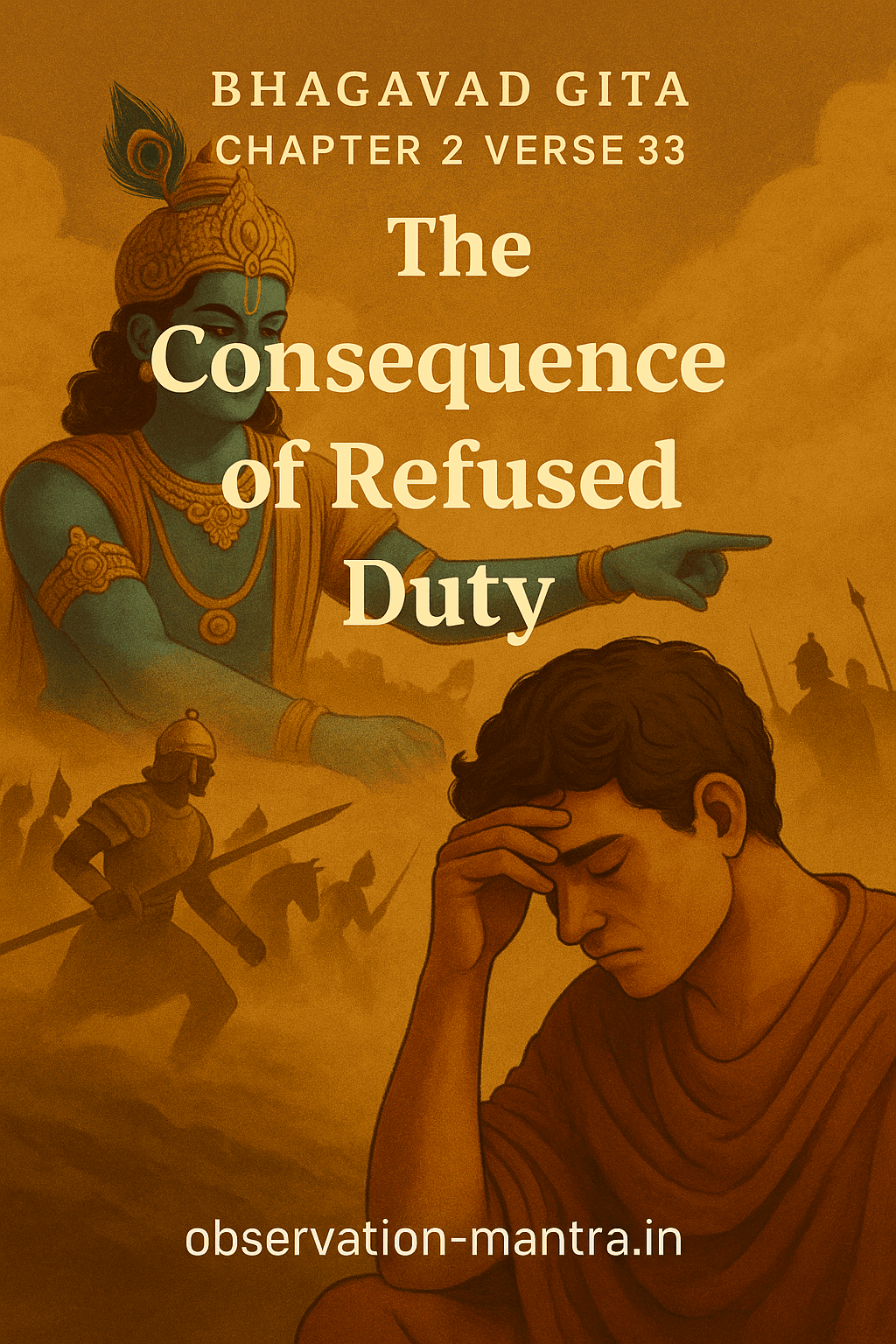
Bhagavad Gita Chapter 2 Shloka 33 Meaning – Dharma, Duty & Courage in Modern Life

Bhagavad Gita 2.33 reminds us that neglecting our duty weakens the soul more than failure ever could. Krishna’s message to Arjuna speaks to us today — whether in careers, relationships, or personal growth. Discover how dharma, courage, and responsibility guide us through life’s toughest choices.

Bhagavad Gita 2.37 – Between Heaven and Earth: The Courage to Stand Up

Digital illustration inspired by the Bhagavad Gita Chapter 2, Shloka 37 showing Krishna and Arjuna, symbolizing Karma Yoga, courage, mindfulness, and resilience in daily life.

Bhagavad Gita 2.37 reminds us that life’s true victory is not measured in winning or losing, but in the courage to rise and act. In this verse, Krishna tells Arjuna that whether one falls in battle or succeeds, both outcomes hold meaning — honor, legacy, and spiritual growth in loss, or joy and responsibility in success. This blog explores the verse through stories, personal reflections, and modern parallels — from students facing exams, to entrepreneurs taking risks, to everyday choices where fear whispers louder than hope. Blending cultural wisdom, psychology, and practical exercises, it shows how Krishna’s assurance still speaks to us: courage never ends in loss. Whether heaven or earth, defeat or triumph, what matters most is the rising.

Home

Observation Mantra — Practical Guidance for Spiritual Growth & Mindful Living Daily reflections, practical lessons, and timeless wisdom to help you grow steadily and live with clarity. At Observation Mantra, you’ll find both Tangible and Intangible insights to support your journey of mindfulness and spiritual growth. Small daily practices for steady inner growth. About Observation … Read more

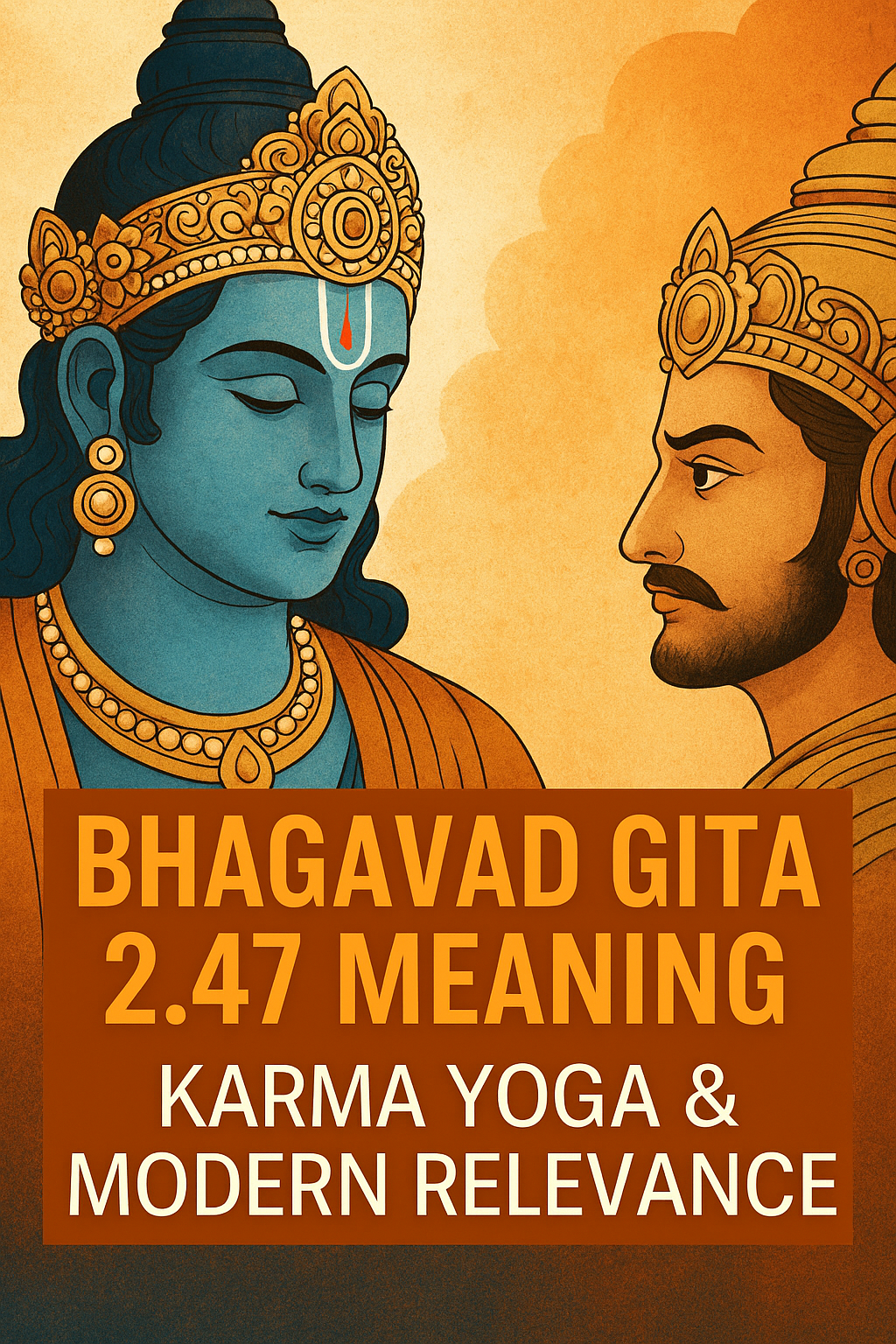
Bhagavad Gita Chapter 2 Shloka 47 Meaning – Karma Yoga & Modern Relevance

Bhagavad Gita Chapter 2 Shloka 47 meaning, Karma Yoga teaching for mindful living and spirituality

Bhagavad Gita 2.47 is a timeless teaching on Karma Yoga. This blog explains its meaning, context, and modern relevance for spiritual growth and mindful living.